Nevada DHHS
Public Health, But Make It Shareable
By 2024, nobody was talking about mpox in Nevada, but it was still here. Nevada DHHS ditched the clinical PSA for something people would share: local influencers, cheeky ads and a hygiene kit worth hanging onto.
Mpox didn’t leave. The headlines did.
In 2022, mpox was all over the news. By 2024, Nevada’s case numbers had dropped and most people had stopped thinking about it, but the virus was still circulating, especially in LGBTQIA+ communities.
Nevada DHHS needed a statewide campaign to keep mpox on people’s radar, get them tested and get them vaccinated. LGBTQIA+ Nevadans, especially men who have sex with men, carried the most risk. They had also carried the blame during the first outbreak, and the name “monkeypox” didn’t help. The national CDC creative wasn’t going to fix that. It felt stale and institutional. The people we needed to reach wanted health information from sources they trusted, without judgment.
Going viral isn’t always good
So we started with a joke that happened to be true. Mpox is literally a viral disease, and going viral isn’t always good. That became the campaign line. Block the Pox, the name, came out of a brainstorm of more than 90 headlines.
We set a few rules early: the work had to be sassy, shareable and positive, and it could never be stereotypical, shameful or risqué. The look was bright and funky, with a meme feel, and designed for phones. Everything pointed back to blockthepox.com, which laid out the facts in plain, friendly language.
Real people beat polished ads
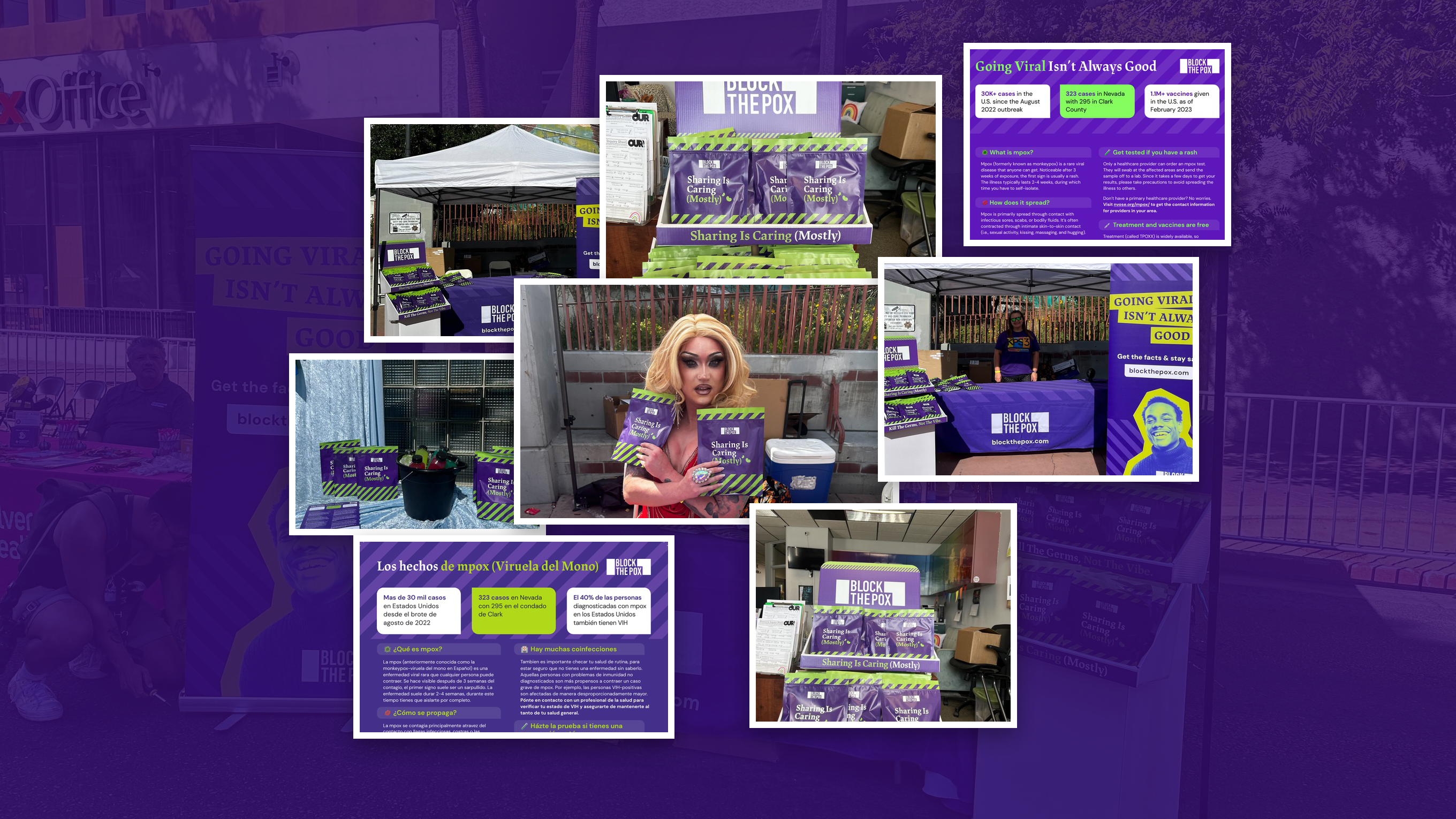
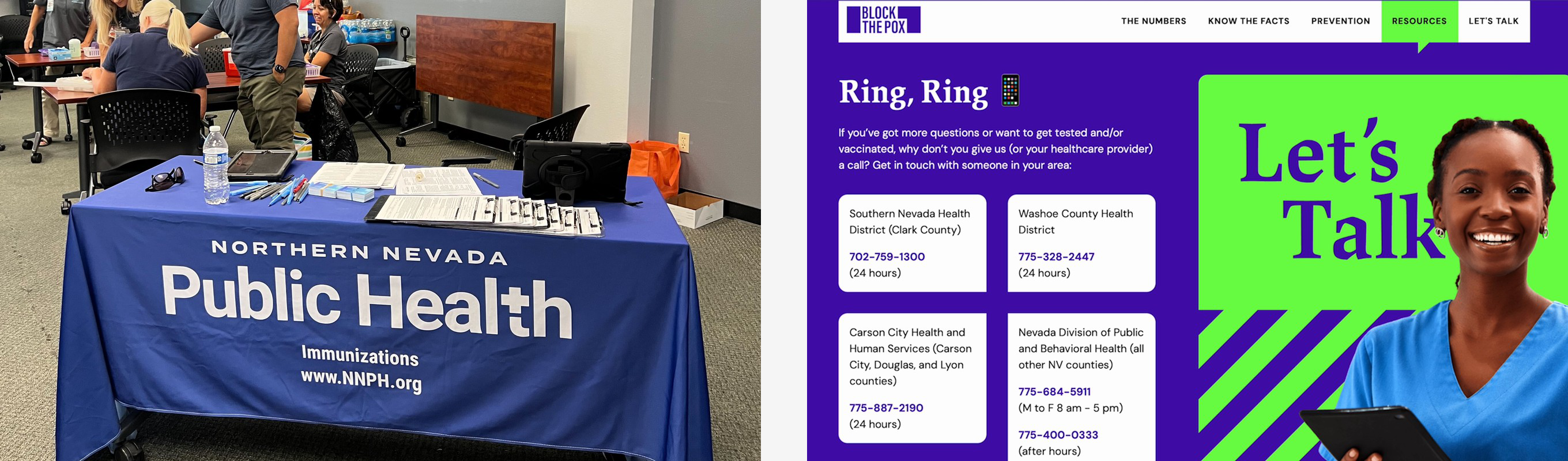
The campaign launched with paid social, bilingual handouts and a first round of influencers. Then we watched what worked. Content from real people consistently out-engaged the polished ads, so the next rounds leaned harder into local voices: drag artists, a physician, professional athletes, student athletes and creators. We also took the message offline, partnering with Nevada organizations, hosting webinars for case managers and outreach workers, and running vaccination clinics for unhoused residents at Washoe County’s CARES Campus.
Something you can hold
By the second phase, people were tired of hearing about it. The most common reaction to an mpox ad was some version of “Who knew mpox was still a thing?” Even influencers were harder to book, because mpox just wasn’t in the conversation anymore.
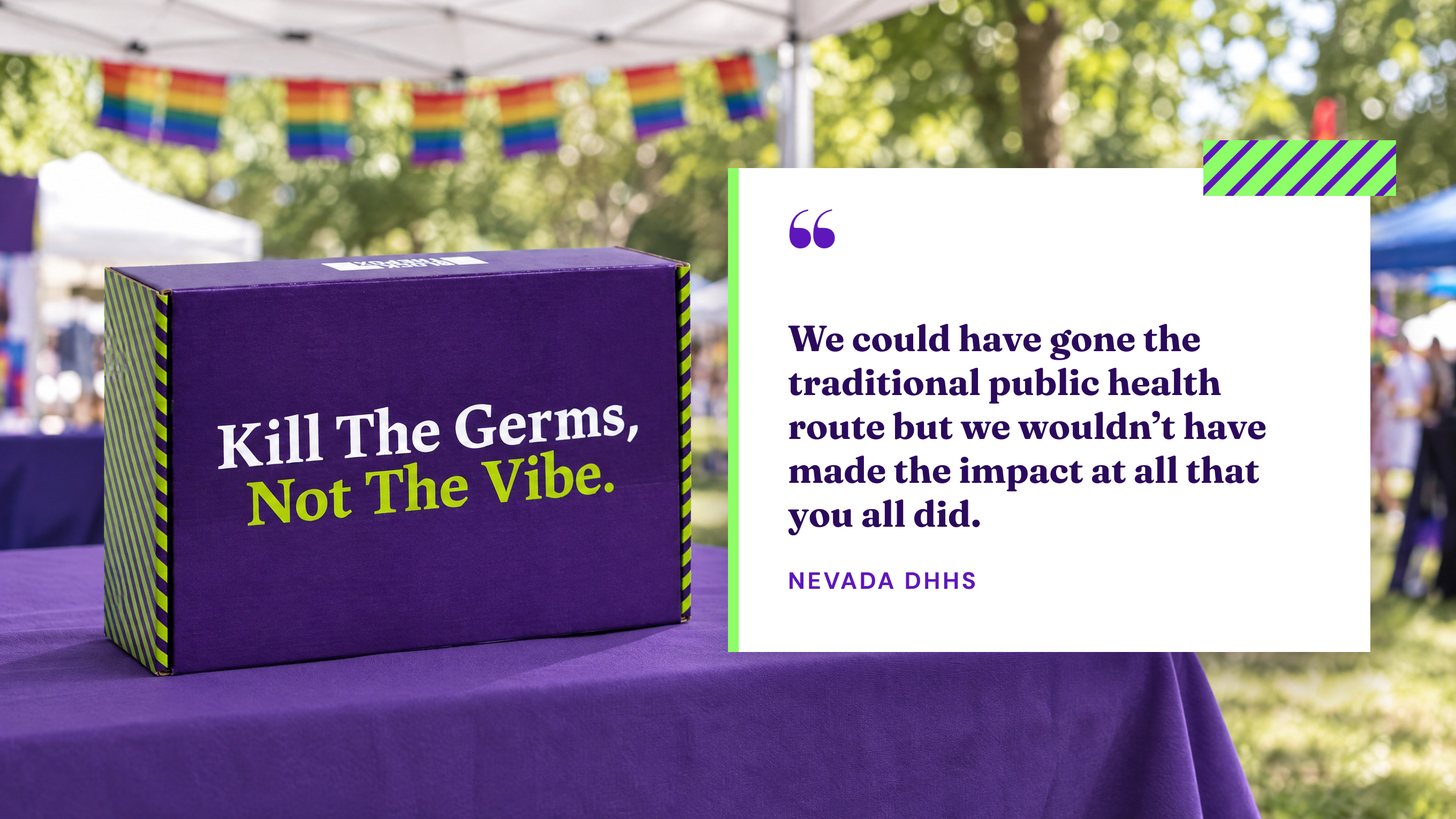
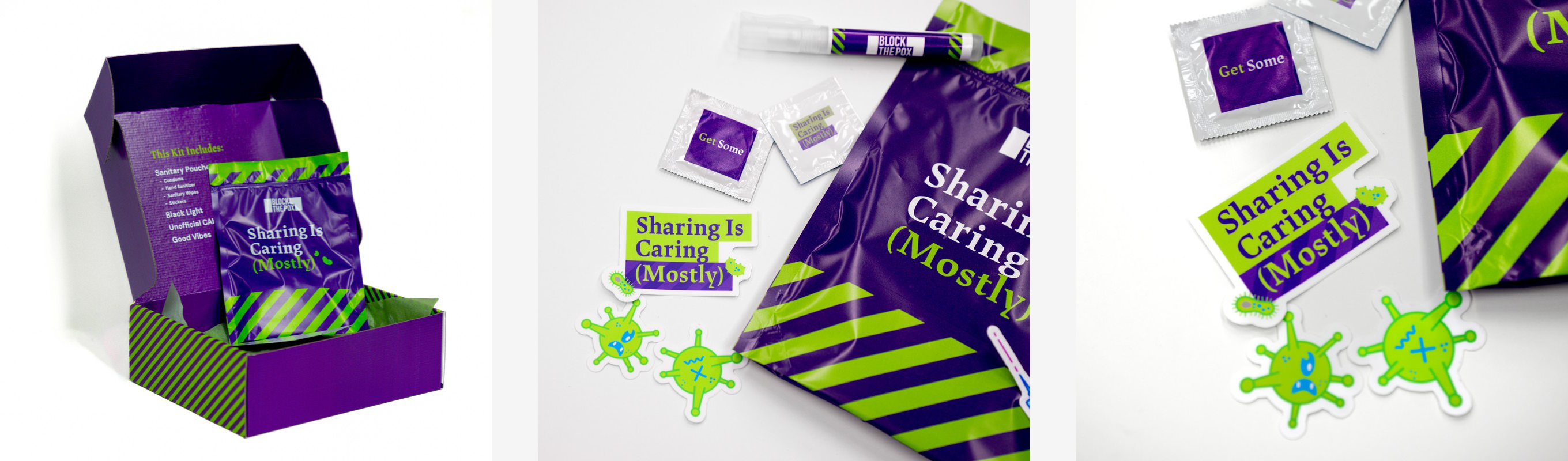
The answer was to make the campaign something you could hold. We designed health kits: stand-up pouches with condoms, wipes, hand sanitizer, stickers, an education card and a QR code to the site. “Sharing Is Caring (Mostly)” on the front. For influencers, we built “Kill the Germs, Not the Vibe” boxes with a black light and UV stickers, which made for a pretty great unboxing. We framed the kits around everyday hygiene, not just sex, so nobody had to feel singled out for picking one up.
The kits gave the whole campaign a center of gravity. They went into influencer content, onto booth tables at Reno Pride and Las Vegas Pride, and into the hands of people at a vaccine block party at Our Center, complete with a photo booth and a DJ. Meanwhile the ad program kept evolving, with 25+ variations in English and Spanish covering Pride, Burning Man, the holidays and local events.
The numbers followed the people
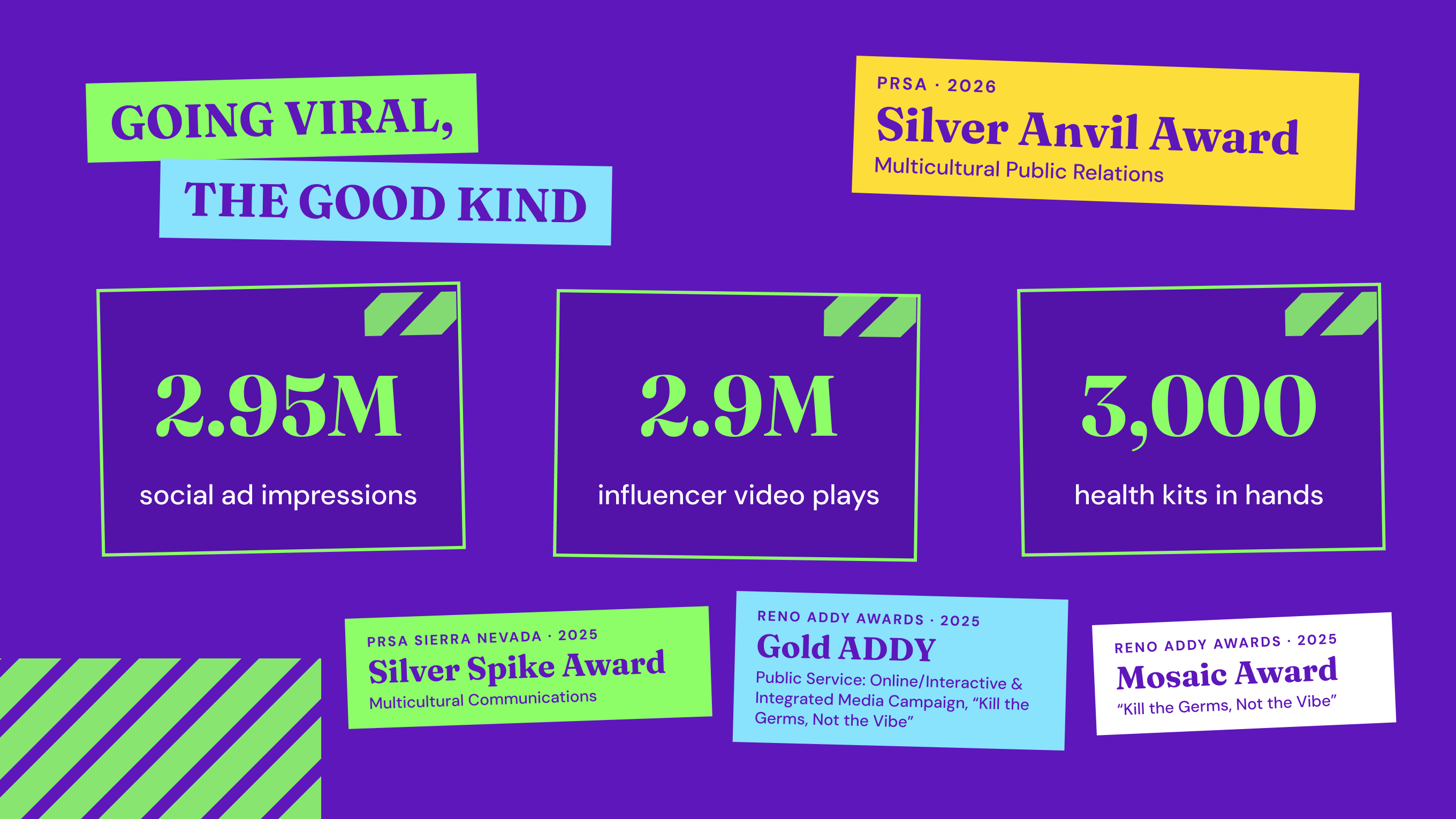
Across the campaign, the ads earned nearly 3 million impressions and influencer content pulled 2.9 million video plays. 3,000 health kits went out, the team reached more than 78 organizations, and three vaccination clinics, two at the CARES Campus and one at Our Center, put about 30 vaccinations in arms.
Long story short
As the campaign wrapped, the team at Nevada DHHS put it simply: “We could have gone the traditional public health route but we wouldn’t have made the impact at all that you all did.”
The work has since picked up some hardware, including a PRSA Silver Anvil, a PRSA Sierra Nevada Silver Spike, two Reno ADDY Awards, and a PRSA PRestige Award rooted in Multicultural & Diversity. But the part we’re proudest of is simpler: A state health agency let culture lead, and Nevadans who had every reason to tune out leaned in instead.
Brought to you by...
Brittany Silva
Shyene Joubert
Kevin Jones
Lauren Hober
Teva Hopper
Alax Vong
Chrisie Yabu
Ashley Chisam
Christine Harcinske
Chelsea Bosco
Kyla Hutchison
Thomas Kohler
Isabel Williams
Callee Marlow
Annie Wagner
Sara Robbins
Sierra Davies
Joe Hopper
Montana Routsis
Liz Seang
Nitish Narala
Elijah Woelbing
Logan Schauer
Going Viral Isn’t Always Good
Mpox had left the headlines but not Nevada. The people most at risk had already been blamed once. So we flipped the internet’s favorite compliment. Going viral is usually a win. With mpox, it’s the problem.
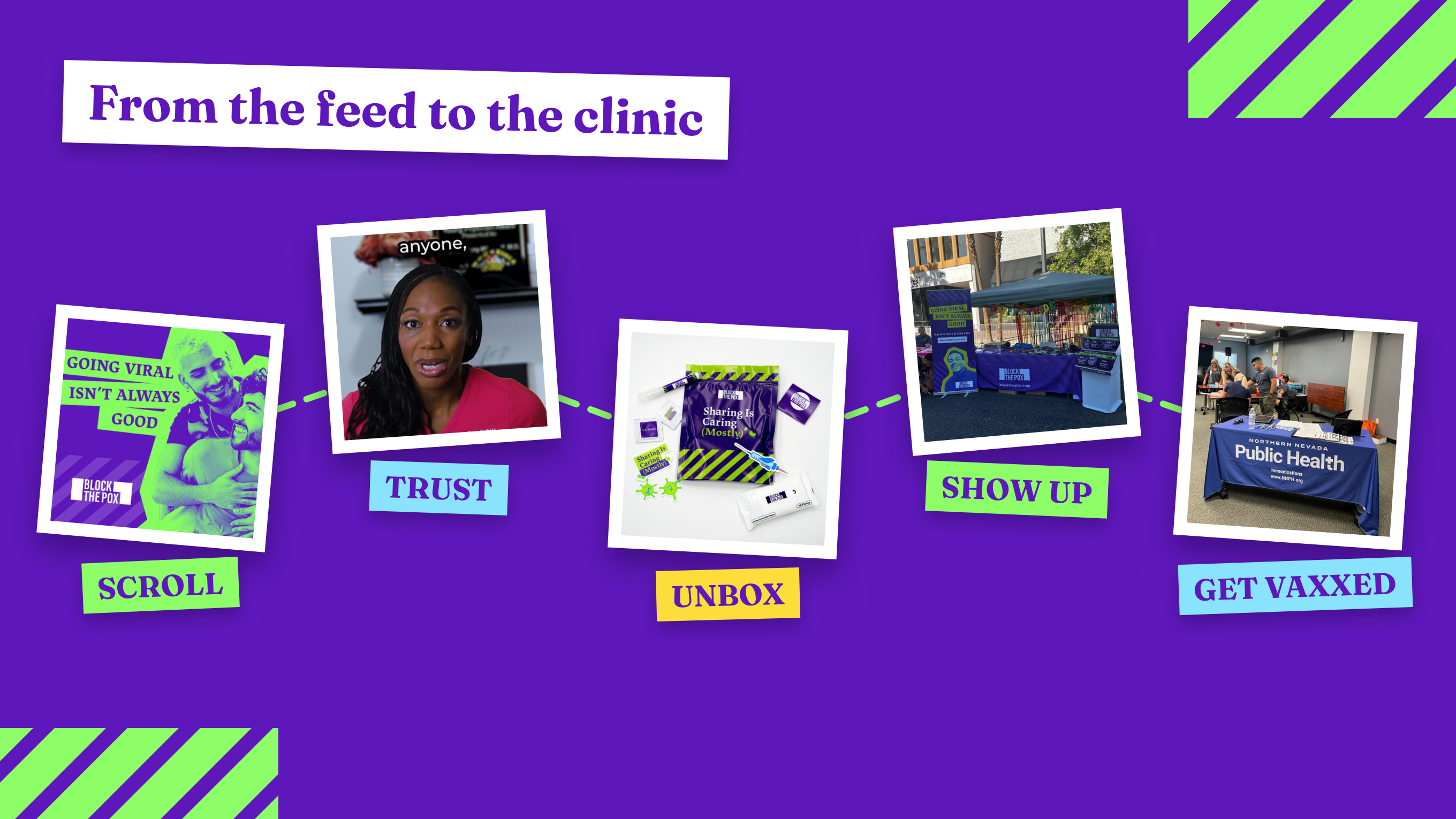
Messengers People Already Trust
25+ ads in English and Spanish, from Pride to Burning Man. Local drag artists, a physician and student athletes as messengers. Then a health kit people actually wanted to unbox. Sharing Is Caring (Mostly).
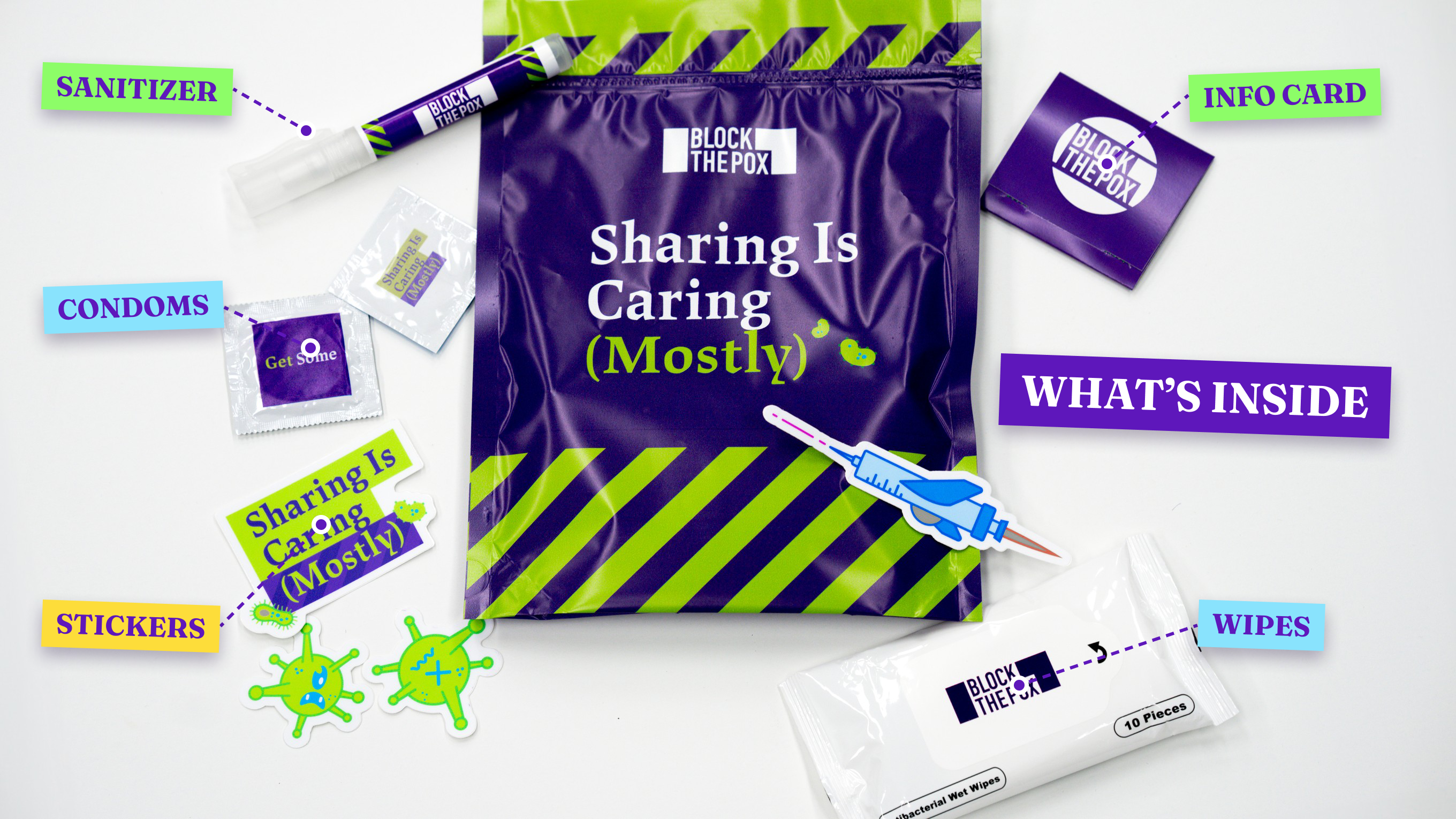
The Campaign Left the Group Chat
Block the Pox showed up where people already were: Pride booths in Reno and Las Vegas, a vaccine block party, clinics for unhoused residents and bilingual handouts. Kits built around everyday hygiene meant anyone could grab one.
People Pressed Play
Real voices outperformed polished ads, and the kits gave people a reason to stop by. Across the campaign: 2.9M influencer video plays, 3,000 health kits in hands and more than 78 organizations reached. Plus a PRSA Silver Anvil.